

The research on social media and adolescent mental health has grown substantially in recent years, and while it is nuanced, several findings are consistent enough to deserve serious attention from parents.
It is worth saying clearly at the start that social media does not harm every child who uses it. Context, platform, parental involvement, individual temperament, and the specific habits surrounding use all shape the outcome. What the research does consistently show is that certain patterns of use, particularly heavy passive consumption on highly visual platforms by adolescents with developing brains, carry real and measurable risks.
The Dopamine Connection

Social media platforms are deliberately designed to trigger dopamine release, the same neurochemical reward system involved in eating, physical connection, and other fundamentally motivating experiences. Notifications, likes, comments, and new followers all create small but real dopamine hits that reinforce the behavior of checking and posting. This can become addictive.
In the adult brain, this reward cycle is one factor among many competing inputs. In the adolescent brain, which is particularly sensitive to social rewards and particularly vulnerable to reward-based learning, the same cycle can establish patterns that feel compulsive rather than chosen. This is not a character flaw in the child. It is a predictable neurological response to a product specifically engineered to produce it.
The platforms themselves understand this well. Former employees at major social media companies have testified publicly about the deliberate use of variable reward schedules, the same psychological mechanism that makes slot machines addictive, in the design of notification systems and content feeds.
What the Research Shows About Mental Health

Multiple large-scale studies have found associations between heavy social media use and increased rates of anxiety, depression, and loneliness in adolescents. Research published in JAMA Pediatrics found that girls who spend three or more hours daily on social media are significantly more likely to experience depression and anxiety compared to peers with lower use.
The relationship between social media and mental health is not identical for all adolescents. Research consistently finds that girls are more negatively affected than boys, likely because social comparison around appearance and social status, which is most acute on visual platforms, maps onto developmental vulnerabilities that are more pronounced in adolescent girls. Boys are more likely to be negatively affected by gaming and online competition dynamics.
An important distinction that emerges from the research is the difference between passive and active social media use. Passive use, scrolling and observing without actively engaging, is more strongly associated with negative mental health outcomes than active use such as messaging close friends, commenting on content, and maintaining genuine social connection. This distinction gives families a meaningful quality standard beyond simple time limits.
Sleep Disruption
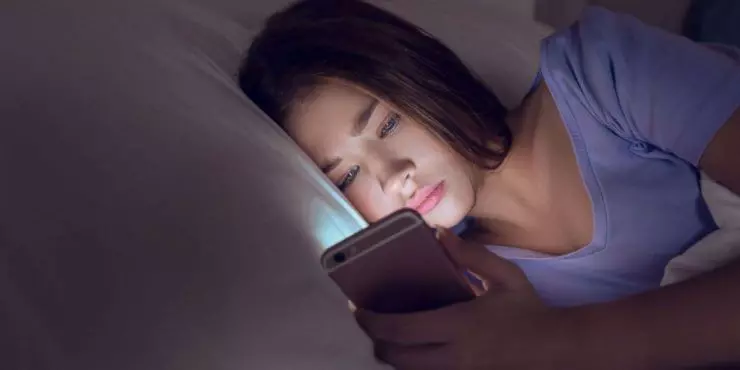
The relationship between social media use and sleep disruption is one of the most consistently documented findings in the research and one of the most practically actionable.
Devices in bedrooms, particularly when used during the hour before sleep, suppress melatonin production through blue light exposure and activate the brain through social stimulation at precisely the time it needs to be winding down. A teenager who receives a notification about a comment on their post at 11pm is experiencing a cortisol spike at exactly the time their body should be transitioning into rest.
Teenagers who sleep with their phones report significantly shorter sleep duration, lower sleep quality, and more difficulty falling asleep than those whose devices are charged outside the bedroom. Given that sleep is foundational to mood regulation, attention, immune function, and physical development, this single factor accounts for a substantial portion of the mental health impact associated with heavy social media use. Improving sleep may be the most effective intervention available for adolescent mental health, and keeping devices out of bedrooms is the most direct path to that improvement.
The Comparison Trap

Social comparison is a normal and developmentally important part of adolescence. Children and teenagers naturally measure themselves against peers to develop their sense of identity and place in the world. Social media dramatically amplifies this process by exposing adolescents to an endless curated highlight reel of peers and strangers at their most attractive, successful, and socially connected.
The images seen on social media are not representative of real life. They are filtered, staged, and carefully selected from hundreds of attempts. But the adolescent brain, which is already highly attuned to social comparison, does not automatically apply that critical filter. The result is a persistent sense of falling short against a standard that doesn't actually exist.
Research specifically examining Instagram use has found significant associations with body dissatisfaction in adolescent girls, with effects that appear after relatively short periods of use. The phrase “compare and despair” captures something real that adolescents themselves frequently identify as one of the most harmful aspects of social media use when asked directly.
Screen Time and Attention
Beyond mood and mental health, there is growing evidence that heavy social media use affects attention span and the ability to tolerate boredom, both of which have implications for academic performance and long-term cognitive development.
Short-form video content in particular, which moves extremely rapidly and is designed to capture attention within the first two seconds, may be conditioning developing brains to expect constant stimulation in ways that make sustained focus on slower, less immediately rewarding activities, like reading, writing, and in-depth learning, feel more difficult. This is an area where research is still developing but the clinical picture being described by teachers and pediatricians is consistent.
Signs Social Media May Be Affecting Mental Health

Parents who know what to look for are in a much stronger position to intervene early. The following signs do not diagnose a problem but they are worth a gentle and non-accusatory conversation.
Mood changes that consistently correspond with social media use, feeling worse after being on the phone than before, are a meaningful signal. Increasing anxiety or preoccupation about how posts are performing, persistent negative self-comparison to peers or influencers, difficulty enjoying activities that do not involve devices, sleep becoming consistently shorter or more disrupted, and withdrawal from in-person relationships in favor of online ones are all worth addressing.
If a child is expressing persistent feelings of worthlessness, hopelessness, or sadness, that warrants a conversation with a doctor regardless of whether social media is involved.
Frequently Asked Questions
Does social media cause depression in teenagers?
The research finds consistent associations between heavy social media use and higher rates of depression and anxiety in adolescents, particularly girls. The relationship is not simple causation, not every teenager who uses social media develops depression, but the associations are strong enough, and the mechanisms well enough understood, to take seriously. Heavy passive use on visual platforms carries the greatest risk.
How much social media use is too much for a teenager?
Research consistently finds that use exceeding three hours per day is associated with meaningfully worse mental health outcomes in adolescents. Below that threshold, the quality of use matters more than the quantity. Active connection with known friends carries far lower risk than passive scrolling through algorithmically selected content.
Why does my teenager seem addicted to their phone?
Social media platforms are specifically designed using variable reward schedules to maximize engagement. The dopamine response triggered by notifications, likes, and new content creates genuine neurological patterns that are difficult to interrupt through willpower alone. This is not a character flaw in the teenager. It is a predictable response to a product engineered to produce it.
Does social media affect boys and girls differently?
Yes. Research consistently finds that adolescent girls experience more significant negative mental health effects from social media use than boys, likely because social comparison around appearance and social status maps onto developmental vulnerabilities more prominently in girls. Boys are more likely to be negatively affected by gaming-related social media dynamics and online competition.
What can I do if I think social media is affecting my child's mental health?
Start with an honest, non-accusatory conversation about what they are experiencing online and how it makes them feel. Implement the bedroom charging rule immediately. Reduce overall use collaboratively rather than as punishment. Bring concerns to a well child visit. If a child is showing persistent signs of depression, anxiety, or self-harm, seek professional support promptly.