
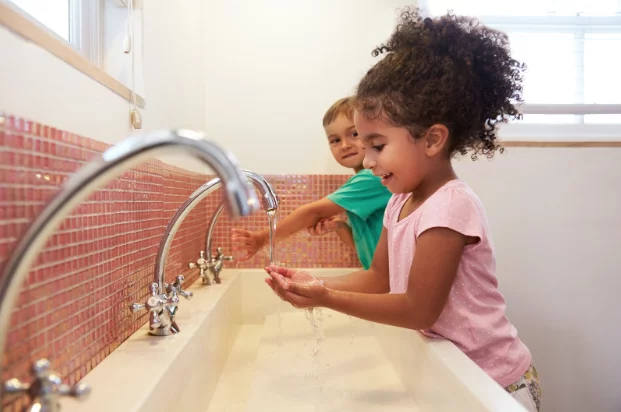
Every fall, families invest in new backpacks, fresh school supplies, and the right pair of shoes. And every fall, many of those same kids spend the first month of school cycling through one cold after another.
The most effective back to school health tool is not a supplement, not a special diet, and it does not cost anything. It is handwashing. Done correctly and at the right moments, it is one of the single most powerful ways to reduce how often children get sick during the school year.
The challenge is that most children, and many adults, are not doing it as effectively as they think they are. Here is what actually works.
Why Handwashing Matters So Much at Back to School Time
Schools bring together large numbers of children who are touching the same surfaces, sharing materials, and spending hours in close contact every day. Germs spread through direct contact and through touching eyes, noses, and mouths with hands that have picked up bacteria or viruses along the way.
Children touch their faces far more frequently than most parents realize, research suggests up to 20 times per hour in some studies, which makes hand hygiene during the school day genuinely important rather than just a good habit in theory. The good news is that consistent handwashing significantly reduces the number of respiratory illnesses children experience, which means fewer sick days, fewer missed activities, and fewer illnesses passed along to the rest of the family.
How to Actually Wash Hands the Right Way
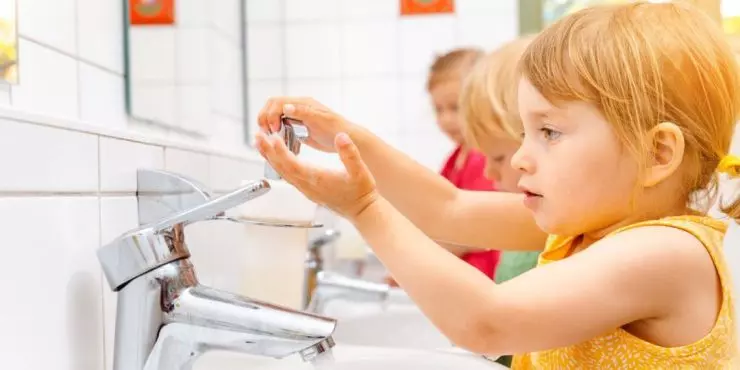
The technique matters. A quick rinse under water does very little. Here is what effective handwashing actually looks like, broken into steps that are easy to teach and easy for kids to remember.
Step 1 — Wet
Turn on warm water, rinse both hands, and turn off the tap.
Step 2 — Lather
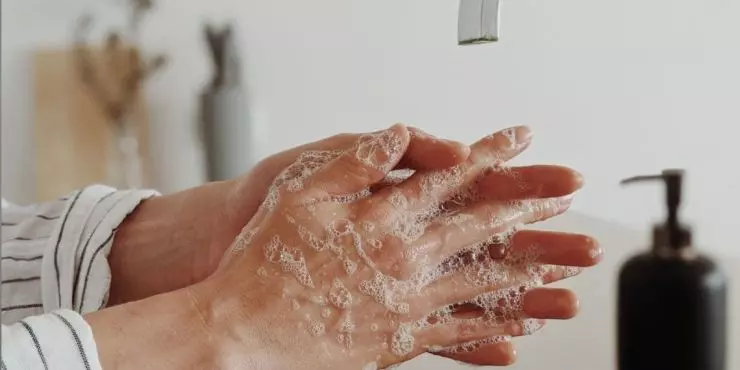
Apply soap, about a tablespoon, and work it into a good lather. Make sure to get soap between the fingers, on the backs of the hands, and under the fingernails. Under the fingernails is where most people miss.
Step 3 — Scrub
Scrub thoroughly for at least 20 seconds. The classic trick for kids is to sing Happy Birthday twice from start to finish, it takes almost exactly 20 seconds and gives them something to focus on other than getting back to what they were doing. For older kids who find the song embarrassing, any chorus they know by heart works just as well.
Step 4 — Rinse
Turn the tap back on and rinse both hands completely under warm running water until all the soap is gone.
Step 5 — Dry
Dry hands thoroughly with a clean paper towel. Wet hands spread germs more easily than dry ones. At school, using the paper towel to turn off the faucet before throwing it away is a small habit worth teaching because it avoids re-contaminating clean hands.
The 20-second scrub is the step most often rushed or skipped. It is also the most important. The physical action of scrubbing is what dislodges germs from the skin, the soap helps, but the mechanical scrubbing does the real work.
When Handwashing Matters Most H2
Teaching kids when to wash is just as important as teaching them how. The times that matter most during a typical school day and at home include:
- Before eating, lunch, snacks, and anything in between
- After using the bathroom
- After blowing the nose, coughing, or sneezing
- After being around anyone who is sick
- Before and after any first aid, treating a cut or wound on themselves or someone else
- After touching shared surfaces with high germ exposure like doorknobs, handrails, and shared equipment
- After handling animals, animal food, or animal waste
- After touching garbage
The general rule is worth passing on to kids directly: when in doubt, wash your hands. It takes 20 seconds and it is rarely the wrong call.
When Soap and Water Are Not Available
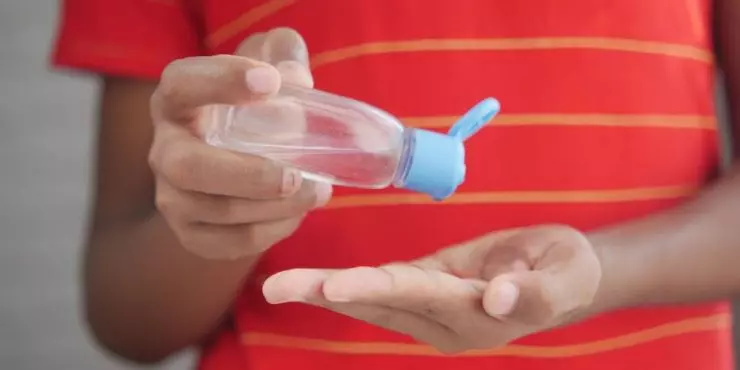
There will be moments during the school day when a sink is not nearby, on the bus, at an outdoor activity, between classes when time is short. In those situations, an alcohol-based hand sanitizer is a solid backup option.
The CDC recommends using a hand sanitizer that contains at least 60 percent alcohol. Anything below that threshold is not reliably effective. Sanitizer works by killing many of the germs on the hands rather than removing them, which is why it is most effective on hands that are not visibly dirty or greasy, but it cannot substitute for a proper wash when hands are actually soiled.
A small bottle of hand sanitizer clipped to a backpack or kept in a front pocket gives kids easy access throughout the day. It is worth teaching children that sanitizer is the backup, not the replacement, soap and water remain the gold standard whenever available.
Making It Stick at Home
Knowing the right technique is one thing. Building the habit is another. A few approaches that genuinely help with younger children:
- Making handwashing a non-negotiable part of the after-school routine before snacks or homework removes the negotiation entirely. It is simply what happens when the backpack goes on the hook.
- Keeping soap that smells good or has an appealing color at the sink makes washing feel less like a chore for younger kids.
- Washing hands together at key moments, particularly before meals, models the habit rather than just instructing it.
- For children who rush the scrub, a small timer or a visual countdown near the sink gives them feedback without requiring a parent to stand there and supervise.
For older children and teens, the motivation is different. Connecting handwashing directly to staying healthy enough to do the things they care about, staying on the team, not missing a game, not falling behind in a class they like, tends to land better than general health messaging.
A Note for Parents About Their Own Hands
Children pick up handwashing habits in large part from watching the adults in their lives. Parents who wash their hands consistently at the same moments they ask their children to, who do not skip steps when they are in a hurry, and who treat it as a normal and unremarkable part of daily life rather than a lecture topic are the most effective handwashing teachers available.
It also matters because parents who come home from work, run errands, and handle everything from groceries to pickup from school are touching a significant number of surfaces throughout the day. Washing hands on arrival home before touching food or greeting young children is a simple habit that reduces transmission within the household meaningfully.
Frequently Asked Questions
How long should kids wash their hands?
At least 20 seconds of scrubbing is the standard recommendation. A reliable way to hit that target without counting is to have children sing Happy Birthday from beginning to end twice. Any song or rhyme that takes about 20 seconds works just as well for older kids who find that option unappealing.
Is hand sanitizer as effective as soap and water?
Soap and water are more effective overall, particularly for removing certain types of germs and for hands that are visibly dirty. An alcohol-based hand sanitizer containing at least 60 percent alcohol is a good alternative when soap and water are not available, but it is best used as a backup rather than a replacement for regular handwashing.
How do I get my child to actually wash their hands properly at school?
Building the habit at home first is the most effective strategy. Making handwashing a consistent and expected part of specific routines, before eating, after the bathroom, when arriving home, creates a pattern the child carries to school. Keeping a small hand sanitizer clipped to the backpack also gives them a convenient option during the school day when a sink is not nearby.
What percentage of alcohol does hand sanitizer need to be effective?
The CDC recommends a minimum of 60 percent alcohol for a hand sanitizer to be reliably effective at reducing germs. Sanitizers below this threshold should be avoided as they do not provide meaningful protection.
Does handwashing actually reduce how often kids get sick?
Yes. Research consistently shows that proper handwashing reduces respiratory illnesses in children significantly. It is one of the most well-supported public health interventions available and one of the few that genuinely works at the individual family level without requiring anything beyond soap, water, and 20 seconds.
What soap is best for handwashing?
Regular soap, whether bar or liquid, is effective. Antibacterial soap is not necessary for routine handwashing and offers no significant advantage over plain soap for everyday use. The most important variable is not the type of soap but the scrubbing time and technique.
When should kids wash their hands at school?
Before eating, after using the bathroom, after blowing the nose or coughing, and after touching shared surfaces are the most important moments during a typical school day. Teaching children the general principle, when in doubt, wash, gives them a useful default they can apply independently throughout the day.