

Few things send a new parent into a spiral of worry faster than a baby who hasn't had a bowel movement in what feels like too long. The questions come quickly. Is something wrong? Are they in pain? Should something be done? Is this normal?
The honest answer is that what's normal for baby bowel movements is far more varied than most parents expect, and a lot of what gets labeled as constipation isn't actually constipation at all. Understanding the difference matters because unnecessary interventions can sometimes cause more disruption than the original concern, while true constipation does need to be addressed thoughtfully.
What Normal Baby Bowel Movements Actually Look Like

One of the most important and least communicated pieces of information for new parents is that normal bowel movement frequency varies enormously between babies and across different stages of development.
In the first few days of life, newborns pass meconium, the thick, dark, tar-like substance that has accumulated in the intestines during pregnancy. This transitions over the first week to transitional stools and then to the characteristic bowel movements of a feeding newborn.
For breastfed newborns in the first several weeks of life, frequent bowel movements are typical and expected. Many breastfed babies have a bowel movement after every feeding, sometimes more. Breastfed baby stool is typically soft, seedy, and mustard yellow in color. It may look loose or even watery, which can alarm parents, but this is completely normal for breastfed infants.
Formula-fed babies tend to have firmer, less frequent stools than breastfed babies. Formula-fed infant stool is often yellow, tan, or brownish and has a thicker, pastier consistency. Frequency varies but is typically somewhat less than breastfed newborns.
Here is where many parents are genuinely surprised. Around 4 to 6 weeks of age, many breastfed babies dramatically reduce their stool frequency, sometimes going several days or even a week or more between bowel movements. This is a normal developmental shift, not a sign of constipation, as long as the baby is comfortable and the stool, when it does come, is soft.
The frequency of bowel movements is far less important than the consistency and whether the baby is comfortable. A baby who goes four days between bowel movements but passes soft stool without distress is not constipated. A baby who strains and passes hard, pellet-like stool every day may well be.
What True Constipation Looks Like in Babies

True constipation in babies is defined less by how often they go and more by the consistency of what comes out and the experience of passing it.
The clearest signs of true constipation include hard, dry, pebble-like or pellet-shaped stools that are difficult to pass, visible straining and significant discomfort during bowel movements, a hard and distended abdomen, and stool that is streaked with small amounts of blood from tiny tears caused by passing hard stool.
It's important to note that straining and grunting during bowel movements is normal in young infants and is not on its own a sign of constipation. Babies have not yet learned to coordinate the relaxation of their pelvic floor muscles with the effort of passing stool. This coordination develops over time. A baby who grunts, strains, and turns red in the face but passes soft stool is not constipated. They are simply learning how their body works.
The concern is when straining is accompanied by hard stool, significant distress, or a baby who appears to be in real pain during attempts to have a bowel movement.
Constipation by Feeding Stage
The causes and presentation of constipation differ depending on where a baby is in their feeding journey, and it's helpful to understand what's typical at each stage.
- Exclusively breastfed newborns rarely experience true constipation. Breast milk is so easily digested that very little waste is produced, and the natural composition of breast milk supports soft stools. If an exclusively breastfed newborn appears constipated, it's worth talking to a doctor because it's uncommon enough to warrant attention.
- Formula-fed babies are more prone to constipation than breastfed babies. The protein structure of formula is harder to digest than breast milk, and different formulas can affect stool consistency differently. If a formula-fed baby is consistently constipated, switching to a different formula may be worth discussing with a doctor.
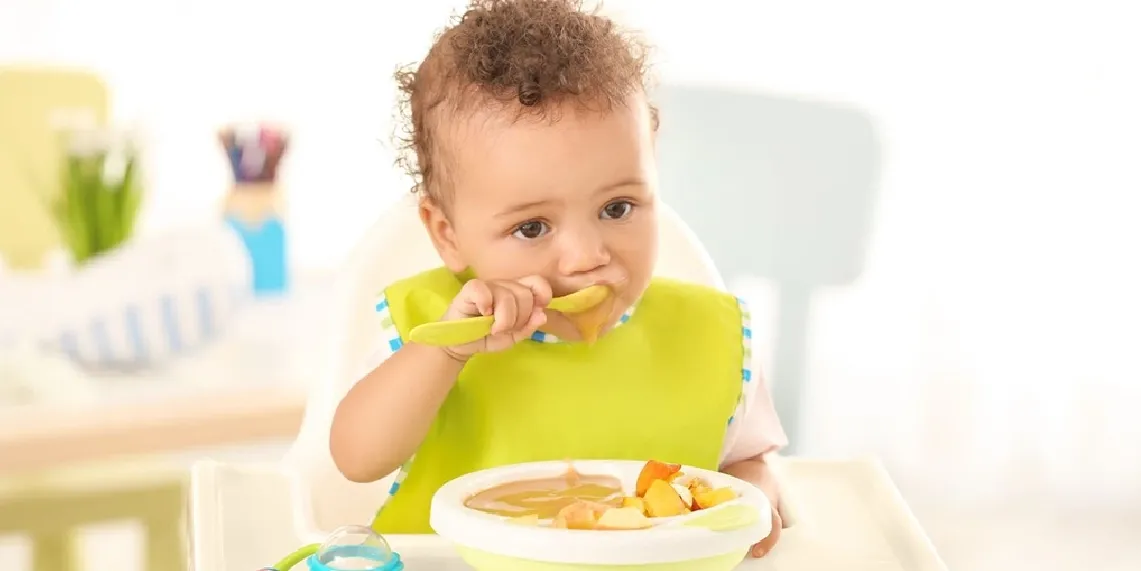
- Babies being introduced to solid foods are the most common age group for true constipation, and this is one of the most significant transitions in a baby's digestive life. Introducing solids, particularly low-fiber options like rice cereal, bananas, and applesauce, can slow digestion and firm up stools significantly. This is one of the reasons the order and variety of solid food introduction matters, and why high-fiber options like pureed prunes, pears, peas, and sweet potatoes are valuable early foods.
- Babies transitioning from breast milk or formula to cow's milk around 12 months also frequently experience constipation. Cow's milk protein can firm stools considerably and the transition can catch parents off guard if they're not aware it's a common occurrence.
What Actually Helps

For formula-fed babies
Switching formula can make a meaningful difference. Some babies do better on partially hydrolyzed formulas or formulas specifically formulated for sensitive digestion. This is worth discussing with a doctor rather than experimenting through multiple formula changes independently, as some switches can cause more disruption than improvement.
Dietary adjustments for babies on solids
These are often the most effective intervention at that stage. The P fruits, prunes, pears, plums, and peaches, are the most well-known and effective dietary approach to infant constipation. They contain a natural sugar called sorbitol that draws water into the colon and softens stool. A small serving of pureed prunes or pear puree can produce results within 24 hours for many babies.
Foods that tend to worsen constipation and are worth reducing when it's a problem include bananas, rice cereal, applesauce, and dairy products. These are sometimes remembered with the acronym BRAT foods and are commonly recommended for diarrhea for exactly the same reason they can cause problems in constipation.
Water for babies over 6 months
Water can help soften stools. Before 6 months, breastfed and formula-fed babies get adequate hydration from their feeds and additional water is generally not needed or recommended.
Bicycle legs
This is a simple and effective technique involving gently moving a baby's legs in a cycling motion while they lie on their back. This movement engages the abdominal muscles and can help stimulate bowel movement. It's worth doing several times a day when constipation is a concern.
Tummy time
Beyond its developmental benefits also provides gentle abdominal pressure that can stimulate digestion and help move things along. Learn more about tummy time.
Warm baths
Warm baths help relax the muscles involved in having a bowel movement and can provide comfort and sometimes stimulate a bowel movement in constipated babies.
Gentle belly massage
In a clockwise direction gently massage the belly, following the natural direction of the colon, can help stimulate movement in the digestive tract. Using a small amount of baby oil or lotion, gentle circular strokes moving from the lower right abdomen upward and across can be both soothing and effective.
What Not to Do
There are several commonly suggested approaches to infant constipation that are not recommended and worth being aware of.
Corn syrup
Particularly dark corn syrup, was historically recommended for infant constipation and is still sometimes suggested in older parenting resources or by well-meaning relatives. It is no longer recommended. Modern processing has changed the composition of corn syrup and its effectiveness is unreliable. More importantly, honey and corn syrup carry a risk of infant botulism and should never be given to babies under 12 months.
Stimulation with a rectal thermometer or cotton swab
This is sometimes suggested as a way to stimulate a bowel movement. While it can work, it should not become a routine because babies can become dependent on external stimulation to trigger a bowel movement, which creates a more significant problem over time.
Laxatives and enemas
These should never be used in infants without explicit guidance from a doctor. Many products safe for older children and adults are not appropriate for infants and can cause harm.
Juice
Juice is sometimes suggested for constipated infants, and while small amounts of certain juices like prune juice can be appropriate for babies over 6 months, juice should not become a regular part of an infant's diet and should only be used as a short-term intervention when other approaches haven't worked.
The Grunting Baby Syndrome Reassurance
Because so many parents come in worried about a grunting, straining baby who is actually perfectly fine, it's worth addressing this directly.
Infant dyschezia is the medical term for the normal developmental phase in which young babies grunt, strain, cry, and turn red in the face during bowel movements despite producing soft stool. It typically occurs in babies under 6 months and is caused by the baby's inability to coordinate increasing abdominal pressure with the simultaneous relaxation of the pelvic floor muscles needed to pass stool.
It looks uncomfortable and it can be distressing to witness, but it resolves on its own as babies develop the coordination needed. No intervention is needed or helpful and attempting to stimulate a bowel movement in a baby with infant dyschezia can actually interfere with the developmental process of learning to coordinate these muscles independently.
The key distinction is always stool consistency. If the stool that eventually comes is soft, there is no constipation, regardless of how hard the baby appeared to work to produce it.
When to Call the Doctor
Most baby constipation resolves with dietary adjustments and the simple techniques described above. There are specific circumstances that warrant calling a doctor sooner rather than later.
A newborn under 4 weeks who has not had a bowel movement in more than 24 hours should be evaluated. In the first weeks of life, bowel movements are an important indicator of adequate feeding and hydration.
A baby of any age who has not had a bowel movement in more than one week, even without other symptoms, is worth a call to the doctor.
Blood in the stool beyond small streaks from a hard stool deserves prompt evaluation.
Constipation accompanied by vomiting, significant abdominal distension, fever, poor feeding, or a baby who seems unwell in any other way warrants a call rather than home management.
Constipation that is persistent, recurring, or doesn't respond to dietary changes over several days is worth discussing with a doctor rather than continuing to troubleshoot independently. In some cases, persistent constipation in infants has an underlying cause that warrants evaluation.
The doctors at Northwest Family Clinics are always available to help parents navigate these concerns. No question about a baby's bowel movements is too small or too embarrassing to bring up. It's one of the most common topics in pediatric care and one that the team is well equipped to help with.
Frequently Asked Questions
How often should a baby poop?
Normal bowel movement frequency varies enormously between babies and across developmental stages. Breastfed newborns often poop after every feeding, while some breastfed babies over 4 to 6 weeks of age may go several days or even a week between bowel movements entirely normally. Formula-fed babies typically go less frequently than breastfed babies. Frequency matters much less than consistency. Soft stools without distress are the goal regardless of how often they occur.
What does constipation look like in a baby?
True constipation in babies is characterized by hard, dry, pebble-like or pellet-shaped stools that are difficult to pass, visible pain or significant distress during bowel movements, a firm and distended abdomen, and occasionally small streaks of blood from hard stool causing tiny tears. Straining and grunting alone, without hard stool, is not constipation.
What helps baby constipation fast?
For babies on solids, pureed prunes, pears, peas, or plums are the most effective dietary approach and can produce results within 24 hours. Bicycle legs, gentle belly massage in a clockwise direction, and warm baths also help. For formula-fed babies not yet on solids, discussing a formula change with a doctor may be the most effective step.
Can breastfed babies get constipated?
Exclusively breastfed babies rarely develop true constipation because breast milk is so easily digested. When an exclusively breastfed baby appears constipated it is worth a call to the doctor as it is uncommon enough to warrant evaluation.
When should I worry about my baby not pooping?
A newborn under 4 weeks who hasn't had a bowel movement in more than 24 hours warrants a call. For older babies, going more than a week without a bowel movement, even without other symptoms, is worth discussing with a doctor. Also call if constipation is accompanied by vomiting, fever, significant abdominal distension, or a baby who seems unwell.
Is it normal for babies to strain and turn red when pooping?
Yes, in young babies under 6 months this is very common and is called infant dyschezia. Babies haven't yet learned to coordinate the muscular effort of pushing with the simultaneous relaxation needed to pass stool. As long as the stool that comes out is soft, this straining is a normal developmental phase that resolves on its own.
What foods cause constipation in babies?
Foods most commonly associated with firming stools and contributing to constipation in babies on solids include bananas, rice cereal, applesauce, white potatoes, and dairy products. Reducing these foods and increasing high-fiber options like prunes, pears, peas, and sweet potatoes is typically the most effective dietary approach.
Can I give my baby juice for constipation?
Small amounts of prune juice can be appropriate for babies over 6 months as a short-term intervention, but juice should not become a regular part of an infant's diet. It should only be used when other approaches haven't worked and ideally after discussing it with a doctor.