

Dehydration is one of those health concerns that sounds straightforward until you're actually in the middle of trying to figure out whether your child has it. The obvious signs, the ones most parents know to look for, tend to show up only after dehydration has already progressed beyond its earliest stages. By the time a child is visibly lethargic or has sunken eyes, something that could have been caught and corrected earlier has had time to get more serious.
The early signs are subtler and easier to dismiss, particularly in the middle of a busy summer day or when a sick child is already miserable and hard to read. Knowing what to look for before dehydration becomes obvious is one of the most practical things a parent can carry into summer, illness season, or any time their child is at higher risk.
Why Children Dehydrate Faster Than Adults

Children are not just small adults when it comes to hydration. Their bodies handle fluid balance differently in several ways that make dehydration both more likely and more significant.
Children have a higher proportion of body water relative to their body weight than adults do, and their metabolic rates are faster, meaning they turn over fluids more quickly. They also have a larger surface area relative to their body size, which means they lose more fluid through the skin in proportion to their weight, particularly in heat.
Perhaps most practically relevant is that children are less reliable at recognizing and communicating thirst. Young children in particular become absorbed in play and activity in ways that cause them to completely override thirst signals. By the time a young child tells a parent they're thirsty, they are already somewhat behind on fluids.
Infants are the most vulnerable of all. They cannot communicate thirst at all and are entirely dependent on caregivers to anticipate and meet their fluid needs. Their smaller body size means that fluid losses from fever, vomiting, diarrhea, or inadequate intake have proportionally larger effects than they would in an older child or adult.
The Early Signs Most Parents Miss
These are the signs that appear before dehydration becomes obvious, and they are the ones most worth knowing because they represent the window when rehydration is easiest and most effective.
Decreased activity and low energy
One of the earliest signs of dehydration in children is a subtle drop in their usual energy level and interest in activity. A child who is normally active and engaged but seems quieter, less interested in playing, or more willing to sit still than usual may be showing early signs of dehydration. This is easy to attribute to other causes, particularly on a hot day when adults are also feeling less energetic, which is exactly why it gets missed.
Irritability and mood changes
Children become noticeably more irritable, easily frustrated, or emotionally dysregulated when they are mildly dehydrated. The connection between hydration and mood in children is real and direct, and a child who is fussier than usual, particularly during or after physical activity or in hot weather, is worth offering fluids to before assuming the mood is purely behavioral.
Dry or sticky mouth
Running a finger gently along the inside of a young child's mouth or cheek gives a reliable early indicator of hydration status. A mouth that feels dry, tacky, or sticky rather than moist is a sign of developing dehydration. This check is particularly useful in infants and toddlers who cannot describe how they feel.
Decreased urine output
This is one of the most reliable early indicators and one of the easier ones to track in young children still in diapers. A diaper that is less wet than usual, or a child who hasn't urinated in three or more hours, is a signal worth taking seriously. In toilet-trained children, going significantly longer than usual between bathroom visits or passing noticeably dark yellow urine are the equivalent signs.
Absence of tears when crying
In infants and young children, crying without producing tears is a meaningful early indicator of dehydration. This is most useful as a comparison to the child's baseline because some babies normally cry with fewer tears than others. A child who typically produces tears but suddenly isn't is worth paying attention to.
Headache
Older children who are verbal may complain of a headache, which is a common early symptom of mild dehydration. Many parents reach for pain relievers at the first mention of a headache, which can mask the underlying cause. Offering water first and waiting twenty minutes is a reasonable first step when a child complains of a headache without other obvious cause.
Thirst
This seems obvious but it belongs on the list because in young children thirst is a lagging indicator, meaning they are already behind on fluids by the time they express it. In older children, consistent thirst throughout the day despite drinking is worth noting as a pattern.
Signs of Moderate Dehydration
As dehydration progresses beyond its earliest stage, signs become more obvious and more urgent.
Moderate dehydration in children typically presents with more pronounced versions of the early signs alongside additional indicators. Eyes that appear slightly sunken or look less bright than usual. Skin that when gently pinched takes slightly longer than normal to spring back, a test called skin turgor. Significantly reduced urine output, with a diaper that has been dry for four to six hours or a toilet-trained child who hasn't urinated in four to six hours. A dry mouth that is noticeably parched rather than just slightly sticky. Increased heart rate. A child who is more clearly lethargic or difficult to engage.
At this stage, active rehydration rather than simply encouraging more drinking is appropriate. The approach depends on the child's age and the cause of the dehydration.
Signs of Severe Dehydration That Require Emergency Care
Severe dehydration in a child is a medical emergency. Parents should seek immediate care if a child shows any of the following signs.
No urine output for eight or more hours. Sunken eyes with no tears. Extremely dry mouth and tongue. Skin that is cool, mottled, or looks gray. Rapid or weak pulse. Extreme lethargy, unusual difficulty waking, confusion, or unresponsiveness. Sunken fontanelle, the soft spot on the top of the head, in infants. Rapid and labored breathing.
These signs indicate that dehydration has become severe enough to affect circulation and organ function and requires intravenous fluid replacement rather than oral rehydration. If there is any uncertainty about whether a child's dehydration has reached a serious level, calling a doctor or going to urgent care is always the right move.
The Most Common Causes of Dehydration in Children

Understanding what puts children at higher risk helps parents be more proactive during vulnerable periods.
Illness with vomiting or diarrhea
This is the most common cause of significant dehydration in children. Both vomiting and diarrhea cause rapid fluid loss and often make it difficult to keep fluids down. When both are happening simultaneously, as in a stomach virus, fluid loss can be significant within hours.
Fever
Fever increases fluid losses through sweating and faster breathing. A child with a high fever who is also eating and drinking less than usual is losing more fluid than normal while taking in less, a combination that can lead to dehydration quickly.
Hot weather and physical activity
These are the most common summer factors. Children exercising or playing actively in heat lose fluid through sweat at rates that can exceed intake if they aren't drinking consistently. The problem is compounded by the fact that children often don't want to stop playing to drink.
Not drinking enough during illness
When children feel unwell they often lose appetite and interest in drinking along with eating. Parents focused on getting a sick child to eat may not notice that fluid intake has dropped significantly.
Inadequate breastfeeding or formula intake in infants
This is the primary cause of dehydration in very young babies and is one of the reasons newborn weight checks and feeding assessments in the early days and weeks are so important.
What Actually Works for Rehydration
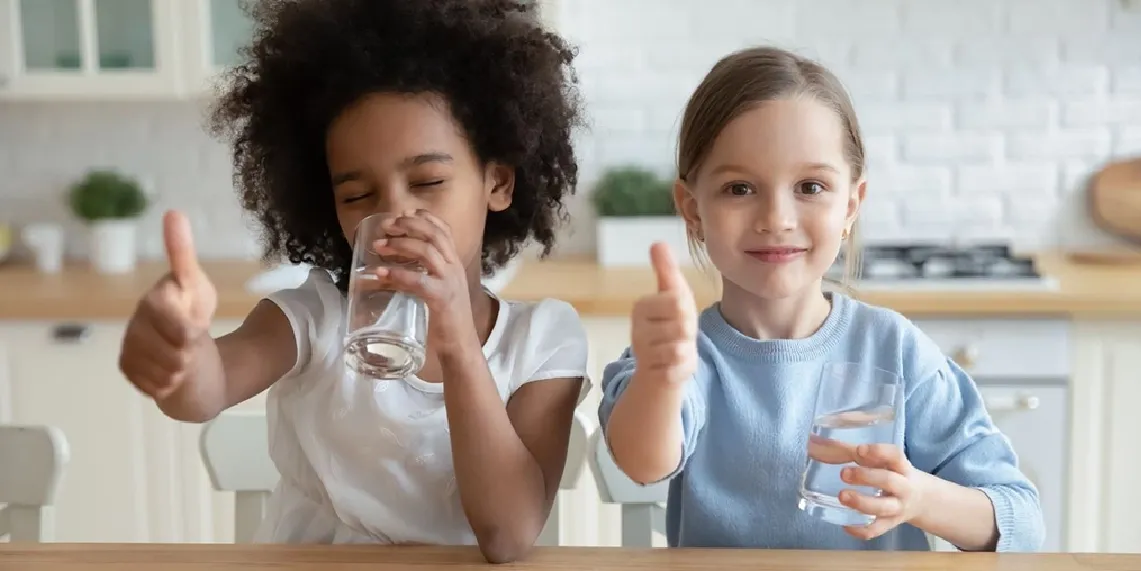
The approach to rehydration depends on the severity of dehydration and its cause. Here is what the evidence supports.
For mild dehydration
Increased fluid intake through whatever the child will drink is usually adequate. Water is the best choice for children over 6 months. For infants, continuing breast milk or formula feeds is appropriate and breast milk in particular provides ideal hydration and immune support during illness.
Oral rehydration solutions
Solutions such as Pedialyte are specifically formulated with the right balance of electrolytes and glucose to support absorption during illness-related dehydration. They are more effective than plain water for rehydration when diarrhea or vomiting is the cause because the sodium and glucose in oral rehydration solutions work together to improve fluid absorption in the intestine. Plain water, while excellent for everyday hydration, doesn't provide this electrolyte balance and can actually dilute the body's electrolytes if given in very large amounts during illness.
Sports drinks are not an appropriate substitute for oral rehydration solutions in sick children. They contain far too much sugar and insufficient sodium to serve the same purpose. Coconut water, while popular, is also not equivalent to a properly formulated oral rehydration solution.
The approach to vomiting
This deserves specific mention because it's one of the most common scenarios parents face. A child who is vomiting and unable to keep anything down should not be encouraged to drink large amounts at once. Small, frequent sips, literally a teaspoon or tablespoon at a time every few minutes, are far more likely to stay down than attempting to give a full cup of fluid. Starting with very small amounts and gradually increasing as tolerance improves is the recommended approach.
Popsicles made from oral rehydration solutions
These are a useful tool for children who resist drinking. Freezing diluted Pedialyte into popsicle molds is something parents can do at home and it's often easier to get a sick child to accept a cold popsicle than a cup of fluid.
For breastfed infants
The most important step during illness or hot weather is increasing the frequency of feeds. Breast milk provides both hydration and comfort and is the ideal fluid for a sick or overheated infant.
Keeping Kids Hydrated Before Dehydration Becomes a Concern
Prevention is always easier than correction, and building consistent hydration habits in children pays dividends throughout childhood.
Making water the default beverage at home rather than juice, milk, or other drinks means children reach for water naturally rather than treating it as an afterthought. Children who grow up drinking water regularly as their primary beverage develop hydration habits that serve them well throughout life.
Sending children out to play in summer with a water bottle and bringing them in for regular water breaks rather than waiting until they ask is one of the most effective practical strategies during warm weather. Children absorbed in outdoor play will reliably miss thirst signals that would prompt an adult to stop and drink.
Offering water with every meal and snack, including water-rich foods like cucumbers, watermelon, strawberries, and oranges in summer, and increasing fluid intake proactively at the first sign of illness or fever are all habits that keep children consistently ahead of dehydration rather than behind it.
For families in Minnesota where summer heat can be genuinely intense during peak months, paying particular attention to hydration during outdoor activities between late morning and mid-afternoon, when temperatures are highest, is worth building into the summer routine.
When to Call Northwest Family Clinics
Most mild dehydration in children can be managed at home with increased fluids and oral rehydration solutions. There are specific circumstances where calling is the right move.
An infant under 3 months who shows any signs of dehydration warrants a call immediately. Young infants can deteriorate quickly and are not appropriate candidates for watchful waiting.
A child of any age who has been vomiting for more than 24 hours, has had significant diarrhea for more than 24 to 48 hours, or has a combination of both and is showing early signs of dehydration despite attempts at rehydration should be seen.
A child who is unable to keep any fluids down for more than four to six hours despite small frequent sips is worth a call.
Any child showing signs of moderate or severe dehydration as described above, or any child whose condition feels concerning to a parent regardless of specific symptom thresholds, is worth a call. The team at Northwest Family Clinics would always rather hear from a concerned parent and provide reassurance than have a child's dehydration go unaddressed.
Frequently Asked Questions
What are the first signs of dehydration in a child?
The earliest signs of dehydration in children include decreased activity and low energy, increased irritability, a dry or sticky mouth, decreased urine output, absence of tears when crying, and headache in older children. These signs appear before dehydration becomes obvious and represent the window when rehydration is easiest.
How can I tell if my child is dehydrated?
The most reliable early checks are urine output and mouth moisture. A child who hasn't urinated in three or more hours, is passing dark yellow urine, or has a dry and sticky mouth rather than a moist one is showing signs of developing dehydration. Decreased activity, irritability, and absence of tears when crying are additional indicators.
How do I rehydrate a child who won't drink?
For a child who is resistant to drinking, offering very small amounts frequently rather than encouraging large amounts at once tends to work better. Oral rehydration solution popsicles are often accepted more readily than a cup of fluid. For young children, offering a preferred cup, a straw, or flavored oral rehydration solution can help. Small consistent amounts over time are more important than large amounts infrequently.
Is Pedialyte better than water for dehydrated kids?
When dehydration is caused by vomiting or diarrhea, yes. Oral rehydration solutions like Pedialyte contain the right balance of electrolytes and glucose to support fluid absorption in the intestine during illness. Plain water alone doesn't provide this balance. For everyday hydration in a healthy child, water is ideal.
How much water does a child need each day?
General guidelines suggest approximately 4 cups per day for children aged 1 to 3, about 5 cups for children aged 4 to 8, and 7 to 8 cups for older children and teenagers. These amounts increase with physical activity, heat, and illness. A child whose urine is pale yellow is generally well hydrated.
When should I take my child to the doctor for dehydration?
Seek immediate care if a child shows signs of severe dehydration including no urine for eight or more hours, sunken eyes without tears, extreme lethargy, confusion, rapid weak pulse, or a sunken fontanelle in infants. Call a doctor for moderate signs, for an infant under 3 months with any dehydration signs, for vomiting lasting more than 24 hours, or for any situation where a parent feels concerned.
Can a child get dehydrated just from playing outside in summer?
Yes. Children lose fluid through sweat during physical activity, particularly in heat, at rates that can quickly exceed intake if they aren't drinking consistently. Children are also poor at recognizing and responding to thirst during active play. Proactive water breaks rather than waiting for a child to ask for water are the most effective prevention strategy during outdoor summer activity.
What drinks should I avoid giving a dehydrated child?
Sports drinks are not appropriate for rehydrating sick children because they contain too much sugar and insufficient sodium. Juice and soda are also not appropriate for rehydration. Coconut water, while hydrating in everyday contexts, is not equivalent to a properly formulated oral rehydration solution during illness. Plain water is appropriate for mild everyday dehydration but oral rehydration solutions are preferable when vomiting or diarrhea is the cause.