

The sun has a complicated reputation in modern health culture. On one side, there are well-founded warnings about skin cancer, premature aging, and the risks of burning. On the other, there is a growing body of research documenting the very real health benefits of sunlight, alongside a recognition that some people have swung so far toward sun avoidance that they are now dealing with the health consequences of too little exposure rather than too much.
The goal, as with most things in health, is not elimination but balance. And finding that balance requires understanding what sun exposure actually does in the body, both the beneficial and the harmful effects, and how to enjoy the outdoors in a way that captures the benefits while meaningfully reducing the risks.
What Sunlight Actually Does in the Body
Sunlight is not a single thing. It is made up of different wavelengths of radiation, and the ones most relevant to human health are ultraviolet A (UVA) and ultraviolet B (UVB) rays.
UVB rays are the ones responsible for vitamin D production. When UVB rays hit the skin, they trigger the conversion of a cholesterol compound in the skin into vitamin D3, which is then processed by the liver and kidneys into the active form of vitamin D the body uses. This is the most efficient way the human body obtains vitamin D, and dietary sources alone are rarely sufficient to maintain optimal levels without some sun exposure or supplementation.
UVA rays penetrate more deeply into the skin than UVB rays. They contribute to tanning, skin aging, and are a significant factor in skin cancer risk. UVA rays are present throughout daylight hours at relatively consistent intensity regardless of season or weather and can penetrate glass, meaning sun damage can occur even indoors near windows or while driving.
Both UVA and UVB rays contribute to sunburn and skin cancer risk, with UVB being primarily responsible for sunburn and playing a major role in the development of melanoma and other skin cancers.
Understanding this distinction matters for practical sun protection because sunscreens that only protect against UVB rays leave skin vulnerable to the deeper and more insidious damage of UVA exposure. Broad-spectrum sunscreens that address both are always the appropriate choice.
The Real Benefits of Sun Exposure

The health benefits of appropriate sun exposure are real, documented, and worth taking seriously in a culture that sometimes treats all sun exposure as uniformly dangerous.
Vitamin D production
This is the most widely known benefit and remains one of the most significant. Vitamin D functions more like a hormone than a vitamin in the body, influencing immune function, bone health, mood regulation, cardiovascular health, and protection against certain cancers. Vitamin D deficiency is associated with increased risk of osteoporosis, autoimmune conditions, depression, and seasonal affective disorder among other conditions.
In Minnesota, vitamin D deficiency is particularly common because the state's northern latitude means that for roughly five months of the year the sun is at too low an angle to trigger meaningful vitamin D production even on bright clear days. This makes the summer months genuinely important for building and maintaining vitamin D levels.
Mood and mental health benefits
Sunlight exposure directly affects serotonin production in the brain, with higher light exposure associated with higher serotonin levels and improved mood. This is one of the mechanisms behind seasonal affective disorder, which affects a significant portion of the Minnesota population during the dark winter months.
Light exposure also plays a fundamental role in regulating circadian rhythms. Morning sunlight in particular is one of the most powerful cues for the body's internal clock, promoting alertness during the day and improving sleep quality at night. Children and adults who spend time in natural light during the day, particularly in the morning, tend to sleep better than those who spend most of their time in artificial indoor lighting.
Immune function
The immune system is supported by appropriate sun exposure through mechanisms that go beyond vitamin D production. Research has found that UV light activates T cells, a key component of immune function, suggesting a direct immune-modulating effect of sunlight.
Outdoor time and physical activity
The outdoor time that comes with sun exposure is associated with reduced rates of obesity, better mental health, improved attention in children, and reduced myopia risk. Research has found that children who spend more time outdoors have significantly lower rates of nearsightedness than children who spend most of their time indoors, an effect that appears to be related to exposure to natural light rather than simply near versus far focusing.
The Real Risks of Too Much Sun Exposure
The risks of excessive sun exposure are equally real and deserve clear-eyed attention rather than dismissal.
Skin cancer
This is the most serious and well-documented risk. Skin cancer is the most common cancer in the United States, and both cumulative sun exposure over a lifetime and episodic intense exposure leading to sunburn contribute to risk. Melanoma, the most dangerous form of skin cancer, is strongly associated with a history of sunburns, particularly during childhood. This is why sun protection in childhood is not an overreaction. It is a meaningful long-term health investment.
Sunburn
This is an acute inflammatory response to UV radiation that causes DNA damage in skin cells. Even a single blistering sunburn in childhood or adolescence increases lifetime melanoma risk. Sunburn is painful, it's damaging, and it is largely preventable with consistent sun protection practices.
Premature skin aging
This is caused primarily by cumulative UVA exposure. The breakdown of collagen and elastin in the skin from UV radiation produces the wrinkles, sagging, dark spots, and leathery texture that characterize sun-damaged skin. This process begins long before it's visible and accumulates over decades.
Eye damage
Eye damage from UV exposure includes increased risk of cataracts and macular degeneration. UV-protective sunglasses are a meaningful protective measure for both children and adults, particularly during peak sun hours.
Immune suppression
This is a less widely known effect of excessive UV exposure. High levels of UV radiation have been shown to suppress local and systemic immune responses in the skin, which is one of the mechanisms that allows skin cancers to develop and progress.
What Is Actually a Healthy Amount of Sun Exposure
This is the question most people actually want answered and it is, genuinely, more nuanced than a single number can capture. The right amount of sun exposure varies by skin tone, age, geographic location, time of year, time of day, and individual health status.
A general framework that most doctors and researchers support is moderate, unprotected sun exposure on a limited amount of skin for a short period during midday hours, combined with sun protection for longer or more intense exposure.
In practical terms, for fair-skinned individuals in Minnesota during summer, something in the range of 10 to 20 minutes of midday sun on the arms and legs without sunscreen on most days is often cited as sufficient for meaningful vitamin D production. Individuals with darker skin tones require longer sun exposure for the same vitamin D production because melanin, the pigment responsible for skin color, absorbs UV radiation and reduces its penetration to the deeper skin layers where vitamin D synthesis occurs.
After that initial period of unprotected exposure, sun protection through sunscreen, protective clothing, hats, and shade becomes appropriate for extended outdoor time.
It's important to understand that this framework applies to healthy vitamin D production, not to a general endorsement of unprotected sun exposure for any duration. The 10 to 20 minute window for vitamin D production happens well before the skin begins to sustain meaningful damage.
Also worth knowing is that sunscreen applied to the entire body does not prevent vitamin D production entirely. Most people do not apply sunscreen perfectly, and the areas not covered or inadequately covered continue to produce vitamin D. Studies have not consistently shown that regular sunscreen use leads to vitamin D deficiency in people who spend time outdoors.
Sun Protection That Actually Works
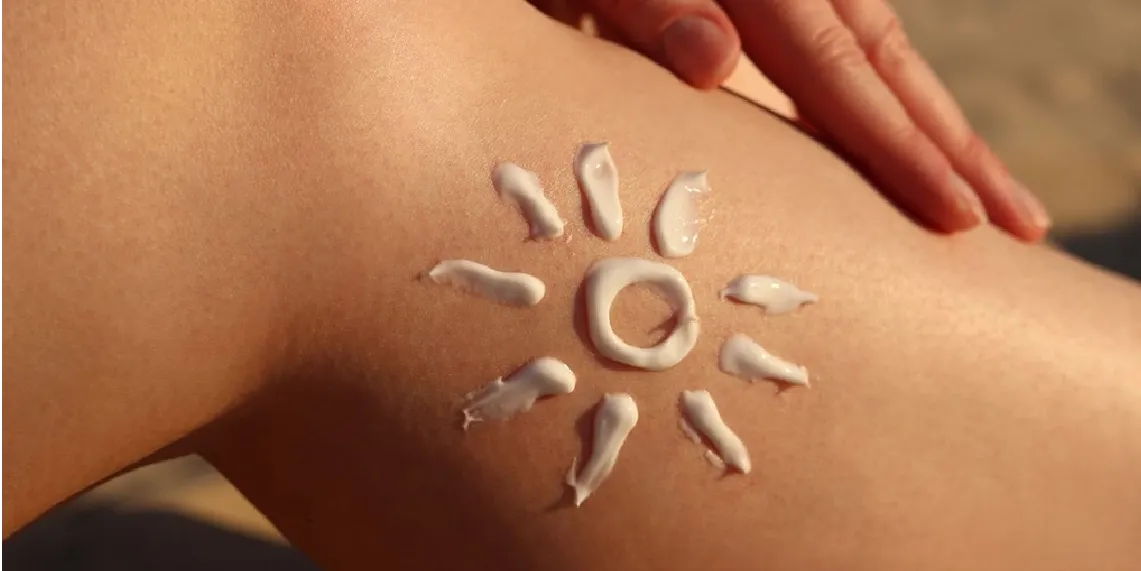
Effective sun protection is not about avoiding the sun entirely. It is about reducing the cumulative and acute UV damage that carries the most significant risks, particularly burning and long-term skin cancer risk.
Sunscreen
Sunscreen remains one of the most effective tools available but its effectiveness depends entirely on how it is used.
Broad-spectrum sunscreen, meaning one that protects against both UVA and UVB rays, is always the appropriate choice. SPF 30 blocks approximately 97 percent of UVB rays. SPF 50 blocks approximately 98 percent. The marginal difference above SPF 30 is small but SPF 30 is considered the minimum effective level for meaningful protection.
The most common sunscreen mistake is not applying enough. Research consistently shows that most people apply far less sunscreen than they would need to achieve the stated SPF. A teaspoon of sunscreen is needed for the face and neck alone. A full ounce, roughly a shot glass worth, is needed to cover an adult body adequately. For children, proportionally less is needed but the coverage needs to be thorough.
Sunscreen needs to be applied 15 to 30 minutes before sun exposure to allow it to bind to the skin, and it needs to be reapplied every two hours and immediately after swimming or significant sweating regardless of whether it is labeled water-resistant.
Sunscreen for babies under 6 months
This is a common question. The general guidance is that babies under 6 months should be kept out of direct sun rather than having sunscreen applied, because their skin is more permeable and the safety of sunscreen chemicals in very young infants has not been as thoroughly established. For brief unavoidable sun exposure in very young babies, mineral sunscreens containing zinc oxide or titanium dioxide are considered safer than chemical sunscreens because they sit on top of the skin rather than being absorbed.
For children over 6 months, both mineral and chemical sunscreens are appropriate. Mineral sunscreens are often preferred by parents concerned about chemical absorption and are a perfectly reasonable choice.
Protective clothing
Protective clothing is often more reliable than sunscreen because it doesn't need to be reapplied, doesn't miss spots, and doesn't wash off. UPF-rated clothing, wide-brimmed hats, and UV-protective swimwear provide excellent protection for prolonged outdoor time and are particularly practical for children who resist sunscreen application.
Shade and timing
These are the most underutilized sun protection tools. UV radiation is most intense between 10am and 4pm, with peak intensity around midday. Seeking shade during these hours, particularly for infants and young children, significantly reduces cumulative UV exposure without requiring any product application. Planning outdoor activities for the earlier morning or later afternoon hours during peak summer is a practical family strategy.
Sunglasses
Sunglasses with UV protection are appropriate for children as well as adults. Wraparound styles provide the best coverage.
Sun Safety for Different Ages

Sun protection needs and considerations differ meaningfully across the age range NFC serves.
Newborns and infants under 6 months
Infants have thin, sensitive skin with minimal melanin protection and should be kept out of direct sun as much as possible. Shade, protective clothing, and a wide-brimmed hat are the primary tools. When sun exposure is unavoidable, a small amount of mineral sunscreen on exposed areas is preferable to no protection.
Babies and toddlers 6 months to 3 years
For babies and toddlers, they can have broad-spectrum sunscreen applied, ideally mineral-based. Hats, protective clothing, and shade remain important because sunscreen application is often incomplete on wriggling toddlers. Building sun protection habits early, treating sunscreen application as a normal part of getting ready to go outside, makes compliance easier as children get older.
School-age children
This age range of children are often outside for extended periods during summer with less direct parental supervision. Teaching them to apply their own sunscreen, reapply after swimming, and seek shade during peak hours builds habits that will serve them throughout life. The cumulative sun exposure of childhood has a direct bearing on lifetime skin cancer risk.
Teenagers
Teens are both the most likely to resist sun protection and the group for whom establishing good habits has particularly long-term significance. A history of sunburns during adolescence is a meaningful melanoma risk factor. Keeping sunscreen accessible, normalizing its use, and connecting sun protection to longer-term skin health rather than just immediate burn prevention resonates better with teenagers than scare tactics.
Adults
Adults benefit from all the same protective practices and additionally benefit from regular skin checks. Knowing what is normal for an individual's skin and noticing changes is one of the most practical ways to catch skin cancer early. The ABCDE rule, asymmetry, border irregularity, color variation, diameter larger than a pencil eraser, and evolution or change over time, provides a useful framework for self-monitoring moles and spots.
A Practical Summer Framework for Families

Putting all of this together into something actionable for a Minnesota family heading into summer looks something like this:
- Embrace morning outdoor time without anxiety about brief, moderate sun exposure. A morning walk, outdoor play before 10am, or time in the garden during cooler hours provides the mood, sleep, vitamin D, and physical activity benefits of outdoor time with lower UV intensity.
- Apply broad-spectrum SPF 30 or higher sunscreen to all exposed skin before extended outdoor time, particularly between 10am and 4pm. Make it a consistent part of the pre-outing routine rather than something that happens only when burning feels like a real risk.
- Use protective clothing, hats, and shade as the primary defense rather than relying entirely on sunscreen, particularly for younger children. Plan water activities for the morning when possible and reapply sunscreen immediately after getting out of the water.
- While not a usual part of an annual physical, consider having vitamin D levels checked if there are concerns about deficiency, particularly for children who spend limited time outdoors or individuals with darker skin tones.
Enjoy summer. The goal is not to eliminate sun exposure but to experience it thoughtfully. The outdoors, the light, and the warmth of a Minnesota summer are genuinely good for health in ways that deserve to be embraced alongside reasonable protection.
Frequently Asked Questions
How much sun exposure do I need for vitamin D?
For fair-skinned individuals in Minnesota during summer, approximately 10 to 20 minutes of midday sun exposure on the arms and legs without sunscreen is generally sufficient for meaningful vitamin D production. People with darker skin tones need longer exposure for the same production. Sun angle, cloud cover, and individual factors all affect this and vitamin D blood testing at an annual physical is the most accurate way to assess individual status.
Can you get too much vitamin D from sun exposure?
No. The body has a self-regulating mechanism that prevents vitamin D toxicity from sun exposure alone. Once sufficient vitamin D has been produced, continued UV exposure degrades the precursors rather than continuing to produce more. Vitamin D toxicity is only a concern with very high-dose supplementation, not sun exposure.
What SPF should I use for my child?
Broad-spectrum SPF 30 is the minimum recommended level and is appropriate for most children. Higher SPF provides marginally more protection and is a reasonable choice for children with fair skin or those spending extended periods outdoors. The most important factor is not the SPF number but consistent and thorough application and reapplication.
Is sunscreen safe for babies?
For babies under 6 months, keeping them out of direct sun and using shade and protective clothing is preferred over sunscreen. For babies over 6 months, both mineral and chemical sunscreens are considered safe. Mineral sunscreens containing zinc oxide or titanium dioxide are often recommended for infants and young children as they sit on top of the skin rather than being absorbed.
Does sunscreen prevent vitamin D production?
Perfectly applied sunscreen does reduce vitamin D production significantly. However, most people do not apply sunscreen completely or uniformly, and studies have not consistently shown that regular sunscreen use leads to vitamin D deficiency in people who spend meaningful time outdoors. Ask your physician at your next annual physical if you are supplementing the right amount of daily vitamin D. Checking vitamin D levels is often not necessary.
When is the sun most dangerous?
UV intensity is highest between 10am and 4pm, with peak intensity around solar noon. Cloud cover reduces but does not eliminate UV exposure. UV rays also reflect off water, sand, and snow, increasing exposure in those environments.
What are the signs of sun damage in children?
Sunburn is the most immediate sign and is itself a form of DNA damage. Over time, cumulative sun damage appears as freckles, uneven skin tone, and changes in moles or spots. Any mole or spot that changes in size, shape, color, or texture, or that bleeds, itches, or looks different from others, is worth having evaluated by a doctor.
How do I get my child to wear sunscreen without a battle?
Starting early and making it a consistent routine rather than an occasional negotiation is the most effective approach. Choosing a sunscreen with a texture and scent the child tolerates, involving them in the application process as they get older, and framing it as a normal part of getting ready to go outside rather than a special imposition reduces resistance significantly.